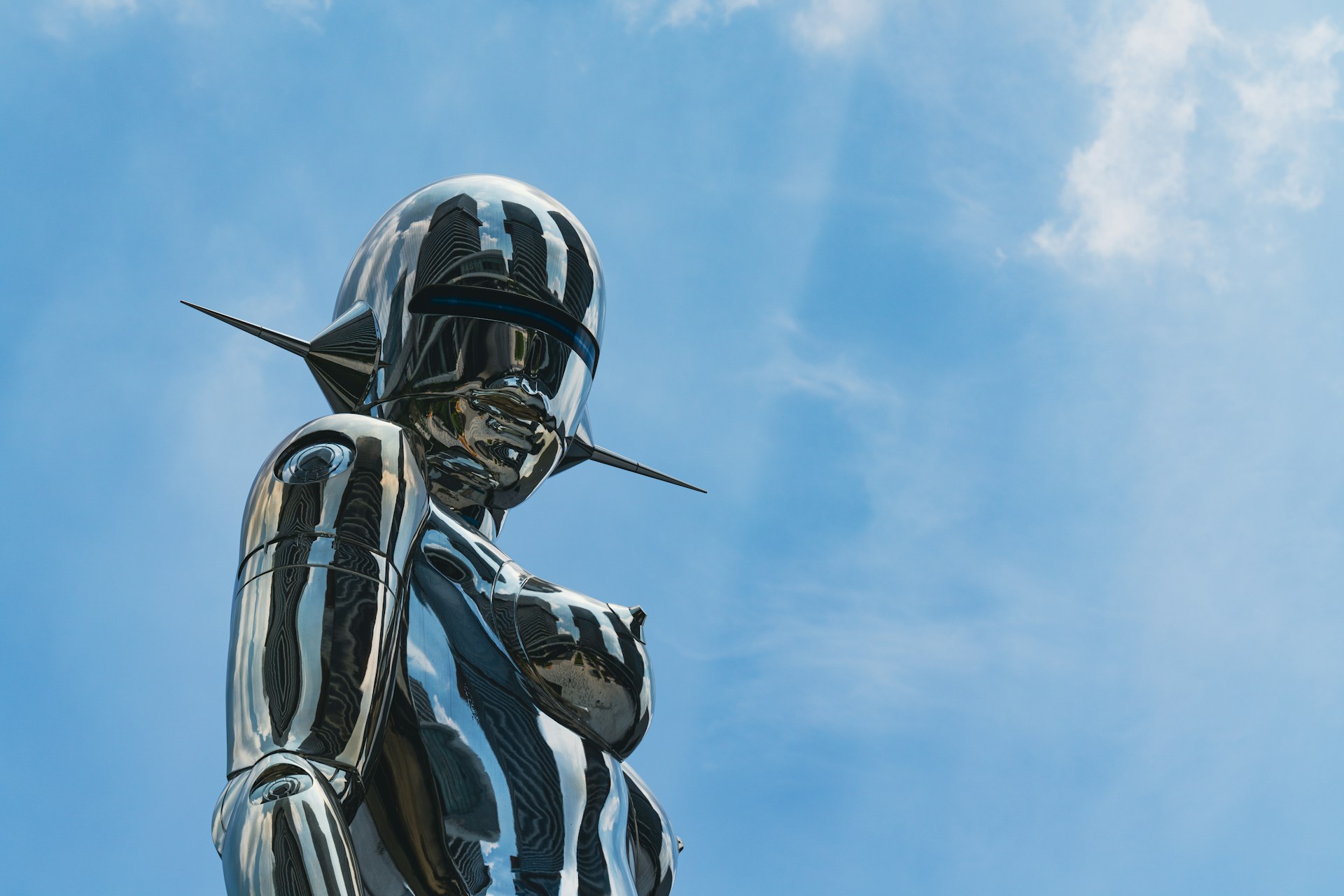
Quick answer: It depends on what you mean by “steal.” Many AI image generators were trained on huge collections of images scraped from the web, often without asking the artists or paying them. Artists call that theft. AI companies call it fair use, comparable to a person learning from the art they see. U.S. courts have not given a final answer for image generators: the main artist lawsuit is still in the pretrial stage, a UK court rejected a major copyright claim over training, and early U.S. rulings on other kinds of AI have gone both ways. What is clear is that the question is both a legal one and an ethical one, and the answers don’t always match.
This guide explains how these tools learn, what courts have actually decided, where artists have real grounds for concern, and what you can do whether you make art, hire artists, or use AI images. We try to represent both sides fairly and to flag what remains unsettled.
Key Takeaways
- Most major image generators were trained on large datasets that included copyrighted artwork collected without individual permission.
- No U.S. court has finally ruled on whether training an image generator on copyrighted art is fair use.
- Style itself isn’t protected by copyright, but copying specific works or characters can infringe.
- The first U.S. appeals court ruling on AI training fair use, in September 2026, went against the AI company, but it involved a non-generative legal research tool, not an image generator.
- Licensed-data tools, opt-out mechanisms, and licensing deals are emerging as middle-ground options.
- Whether training counts as “stealing” legally and whether it feels fair to artists are two separate debates.
How AI Image Generators Learn From Artwork
Most modern image generators are trained on millions or billions of image and text caption pairs. During training, the model repeatedly looks at images and learns statistical patterns: how shapes, colors, textures, and styles relate to words. It doesn’t keep a folder of the images in the usual sense, and when it generates a picture, it builds it from learned patterns rather than pasting from a file.
Two points matter here, and each side tends to stress only one:
- For AI companies: the model learns patterns rather than storing copies, much as a person learns from looking at many paintings.
- For artists: the copying happens during training, when images are collected and processed, and the resulting product can compete with the very people whose work made it possible. Researchers have also shown that models can sometimes reproduce near-copies of images that appeared many times in the training data, which complicates the “it only learns patterns” argument.
Both things can be true at once, and courts are working out which one matters legally.
What Courts Have Decided So Far
Here’s where the key disputes stood as of our November 2026 review. Treat it as a snapshot, since these cases move.
| Case | What it’s about | Status |
|---|---|---|
| Andersen v. Stability AI, Midjourney, DeviantArt, Runway (N.D. Cal.) | Artists’ class action over training on scraped images | Proceeding on copyright claims against all four and Lanham Act claims against Midjourney; the hearing on class certification and summary judgment was set for Sept. 29, 2027, with no trial date |
| Getty Images v. Stability AI (UK) | Photos used in training | In Nov. 2025 the High Court rejected the secondary copyright claim and found limited trademark infringement tied to watermarks; reports on appeal status differ |
| Getty Images v. Stability AI (U.S.) | Same dispute in the U.S. | Reported in April 2026 that direct infringement and trademark claims survived a motion to dismiss |
| Disney, Universal, and Warner Bros. v. Midjourney | Whether the tool generates protected characters | Pending; a test of liability for outputs, not just training |
| Thomson Reuters v. Ross (3d Cir.) | AI trained on Westlaw headnotes | Sept. 29, 2026: affirmed that the use was not fair use; the court distinguished non-generative tools |
| Bartz v. Anthropic (N.D. Cal.) | AI trained on books | June 2025: training on lawfully acquired books held fair use, but keeping pirated copies was not; later settled |
| Kadrey v. Meta (N.D. Cal.) | AI trained on books | June 2025: summary judgment for Meta on the record before the court, with a narrow ruling |
Several of these concern books or legal text, not images, so they’re guides rather than answers for image generators. The Andersen case is the main one for visual artists, and it is slow. As one court filing record notes, the judge has said further delays are not expected, but a hearing is still nearly a year away.
What this adds up to
- No final answer on image training in the U.S. The central fair use question for image generators hasn’t been decided by an appeals court.
- Courts care about market harm. Rulings so far put heavy weight on whether the AI product substitutes for the original works.
- How the data was obtained matters. The Bartz decision treated pirated copies differently from lawfully acquired ones.
- Outputs are a separate risk. Generating recognizable characters or watermarks can create liability even if training is found lawful.
What the U.S. Copyright Office Has Said
The Copyright Office has studied generative AI and published reports on the subject, including a pre-publication report on training in 2025. Its view, in broad terms, was that whether training counts as fair use depends on the facts: what was copied, how it was used, and what effect it had on the market for the originals. It suggested that some training uses are likely lawful and others are not, and it raised concern where AI output competes directly with the works it learned from. These reports aren’t binding on courts, but they are influential.
The Office is also the source of the rule that fully AI-generated images generally can’t be copyrighted. We cover that in our guide on whether AI-generated images are copyright free.
Is Copying a Style “Stealing”?
For many artists, this is the heart of the complaint: you can type an artist’s name and get an image “in their style.”
Legally, style on its own generally isn’t protected by copyright. Copyright protects specific expression, such as a particular painting or character, not a broad look or technique. So a work “in the style of” someone usually isn’t infringing by itself. It becomes a problem when the output copies distinctive elements of a specific work, reproduces a character, or implies the artist endorsed it.
Ethically, many artists see a difference between humans studying their work and a commercial tool that can mass-produce imitations at near-zero cost. That’s a values question the law may not settle, and it’s why debates about consent and compensation continue even if training is found lawful.
What Artists Say, and What AI Companies Say
It helps to hear each side’s strongest argument.
Artists and their advocates argue that:
- Their work was taken without consent, credit, or payment.
- The tools now compete in the same markets, such as illustration, concept art, and stock imagery.
- “Learning” by a company’s software at industrial scale isn’t the same as a person’s study.
- Opt-out systems put the burden on creators after the fact.
AI companies and their supporters argue that:
- Training is a transformative use that creates something new rather than copying works for their own sake.
- Models learn general patterns and don’t store or distribute the images.
- Requiring licenses for every training image would be impractical and would limit innovation.
- Style and ideas have never been protected by copyright.
There are thoughtful people on both sides, and courts have so far shown that outcomes can depend heavily on the specific facts.
Where the Concerns Are Strongest
Even setting the big legal question aside, some risks are real and documented:
- Output that resembles specific works or characters. This is the focus of the studio lawsuits against Midjourney.
- Watermarks appearing in generated images. The UK Getty ruling found limited trademark infringement because earlier model versions could produce Getty and iStock watermarks.
- Memorization of duplicated images. Heavily duplicated images are the ones most likely to be reproduced closely.
- Economic displacement. Artists and artist groups report lost commissions and downward pressure on rates, even though it’s hard to measure precisely.
- Consent and transparency. Many artists don’t know whether their work was used, and they have no practical way to check.
Middle-Ground Models Emerging
Not every tool works the same way. Some approaches try to reduce the conflict:
- Licensed training data. Adobe says its Firefly models were trained on licensed content such as Adobe Stock and public domain material. We explain what that does and doesn’t guarantee in our guide on whether Adobe Firefly is safe for commercial use.
- Opt-out and opt-in mechanisms. Some developers and datasets honor opt-out requests, and some regions, such as the EU, give rightsholders a legal right to reserve their works from text and data mining.
- Revenue-sharing and contributor funds. Some stock platforms compensate contributors whose work trained their models.
- Provenance and labeling. Content Credentials and similar metadata help show when AI was used.
None of these is perfect, and artists differ on whether they are adequate. But they show that “scrape everything” isn’t the only model.
What Artists Can Do
If you make art and are worried about your work being used for training, consider these steps. None is a guarantee.
- Check and use opt-out tools. Some datasets and platforms honor removal requests. Search for current options, since they change.
- Add machine-readable restrictions to your site where possible, such as robots.txt rules and terms of use.
- Consider protective tools. Tools like Glaze and Nightshade, developed at the University of Chicago, aim to make training on your images less effective. Their effectiveness is debated and may change as models evolve.
- Register your copyright for important works. In the U.S., registration is generally required before you can sue and strengthens your remedies.
- Watermark and document your work, and keep dated originals as proof.
- Read platform terms before uploading, since some sites grant themselves broad licenses.
- Follow the litigation and consider joining relevant artist organizations.
- Talk to an IP attorney if you believe your work has been copied specifically.
What Creators and Businesses Using AI Images Can Do
If you use AI images in your work, you can reduce the harm and your own risk at the same time:
- Prefer tools with clear licensing terms and licensed or disclosed training data, especially for client or commercial work.
- Don’t prompt with living artists’ names to imitate their style for commercial use.
- Avoid characters, brands, and recognizable works.
- Add real human creative work instead of publishing raw output. That also strengthens your own rights, as we explain in our guide on whether you can copyright AI art if you edit it.
- Consider hiring artists for work where originality, brand identity, or a distinct voice matters.
- Disclose AI use where platforms, clients, or regulations expect it.
- Read the tool’s terms. Platforms that give you ownership rarely defend you if there’s a claim. We break this down for a popular tool in our guide on using Midjourney images commercially.
If you’re looking for tools to finish or refine designs, our guides to AI illustration generators, AI poster generators, AI flyer generators, and AI icon generators compare options, and removing image backgrounds is a useful cleanup step. For brand work, our guides to creating a logo with AI and the best AI tools to create a custom logo are good next reads.
Is It Legal for Me to Use an AI Image Generator?
Using an image generator is legal in general. The legal risk from training mostly falls on the companies that built the models, and the main risk for users comes from outputs that copy protected works, characters, logos, or people, and from breaking a tool’s terms. But if a court ultimately found a tool’s training unlawful, it could affect the tool’s availability, pricing, and licensing, which is one more reason to prefer tools with transparent data practices.
What Might Change Next
Several things could shift the picture in the coming months and years:
- Rulings in Andersen and other image cases, which would be the first direct tests for image generators.
- Appeals in the Ninth, Second, and other circuits on generative AI and fair use.
- Legislation on training transparency, opt-outs, and compensation, in the U.S. and elsewhere.
- More licensing deals between AI companies and rightsholders, which may set a market price for training data and affect the fair use analysis.
Frequently Asked Questions
Do AI image generators steal from artists?
Many were trained on artwork collected without individual permission, which artists consider theft and AI companies defend as fair use. U.S. courts haven’t finally decided the question for image generators.
Is training an AI on copyrighted images legal?
It’s unsettled. Some courts have found training on books to be fair use in specific circumstances, while another court held that training a competing non-generative tool was not. No appeals court has decided it for image generators.
Can AI copy an artist’s style?
Tools can imitate styles. Style generally isn’t protected by copyright, but copying specific works, characters, or distinctive elements can infringe, and passing work off as someone’s can create other legal problems.
Do AI image generators store the images they were trained on?
They don’t keep a library of images in the usual sense, but research has shown that models can sometimes reproduce near-copies of images that were heavily duplicated in training data.
Can artists sue AI companies?
Yes. Artists have filed suits, including the class action in Andersen v. Stability AI. Cases take years, and outcomes are uncertain.
Can I opt my art out of AI training?
Sometimes. Some platforms and datasets honor removal requests, and the EU recognizes a right to reserve works from text and data mining. Coverage is patchy, so check each service and keep your own records.
Do Glaze and Nightshade work?
They’re designed to make training on your images less effective, but effectiveness is debated and can change as models evolve. They’re one tool, not a guarantee.
Are some AI image generators more ethical than others?
Tools differ in how transparent they are about training data, whether they use licensed content, and whether they compensate contributors. Those are reasonable factors to weigh, though none removes all concerns.
Can I get in trouble for using AI-generated images?
Usually the risk comes from the output: images that copy protected characters, logos, or real people, or that break a platform’s terms. Training disputes mostly target the companies, but they can affect the tools you use.
Will the law change?
Possibly. Pending cases, appeals, and proposed legislation could change the rules, so check for updates if the stakes are high.
The Bottom Line
Whether AI image generators “steal” from artists is a question the law hasn’t finished answering and one that people can reasonably disagree about on ethical grounds. What we can say is that the concerns are real, the lawsuits are serious, and the best path for now is to be transparent, choose tools carefully, respect artists’ work and consent where you can, and keep humans and their creativity at the center of anything that matters.
Sources and Further Reading
- Andersen v. Stability AI Ltd., No. 3:23-cv-00201 (N.D. Cal.), scheduling order of Sept. 28, 2026, and public coverage of that order
- Getty Images v. Stability AI, UK High Court (Nov. 2025) and U.S. proceedings
- Thomson Reuters v. Ross Intelligence, 3d Cir. (Sept. 29, 2026)
- Bartz v. Anthropic and Kadrey v. Meta (N.D. Cal., June 2025)
- U.S. Copyright Office reports on copyright and artificial intelligence (2025)
Disclaimer: This article is for general information and is not legal advice. Copyright law varies by country and changes over time. For decisions that affect your work or business, consult a qualified intellectual property attorney.
Sujan Pariyar is an international writer. He frequently writes about tech, AI, business, and travel on Silicon Valley Times, NYWeekly, Washington Magazine, Huffpost, Thrive Global and more.




Be First to Comment