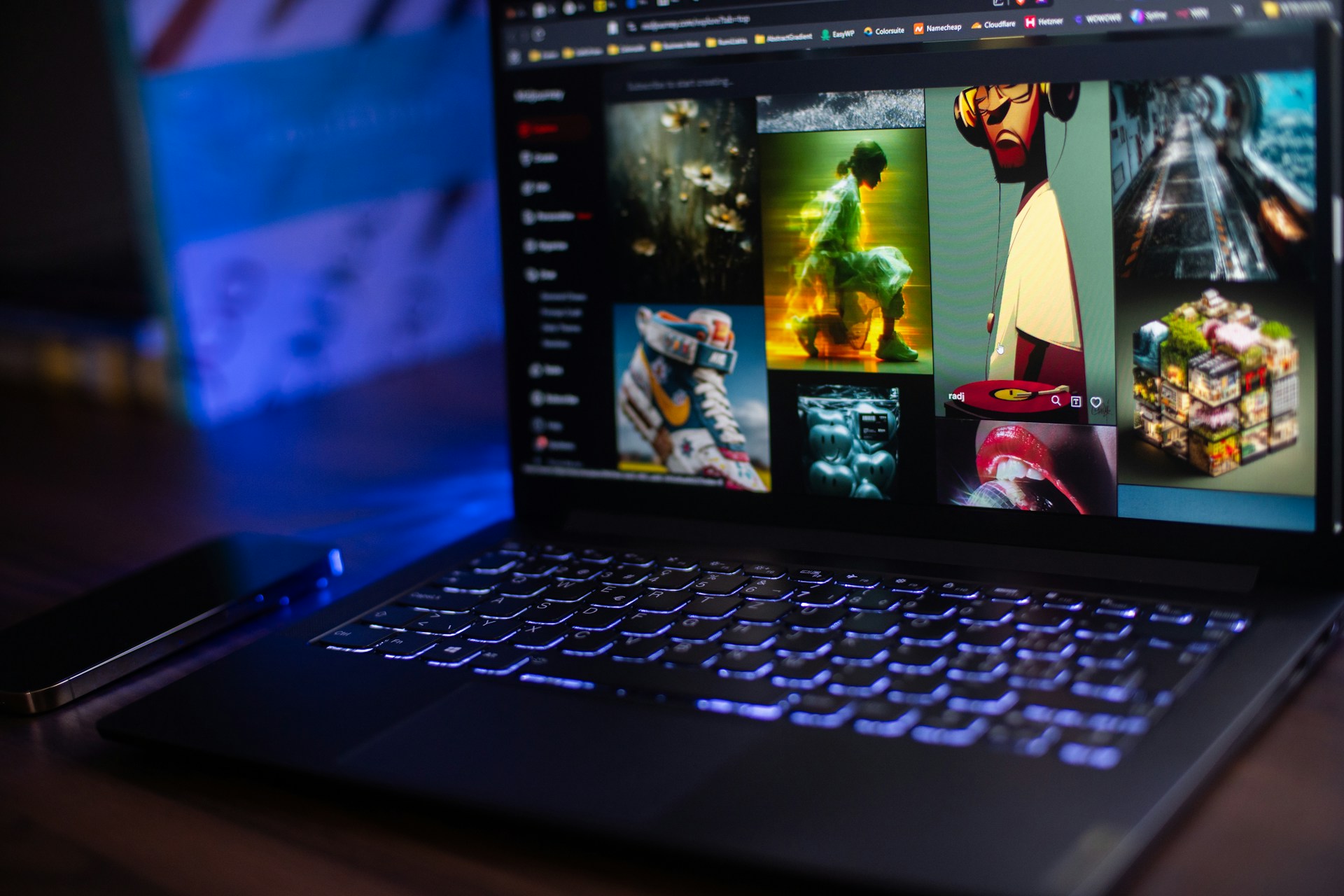
Can I Use Midjourney Images for Commercial Use? What the 2026 Terms Actually Say
Quick answer: Yes, in most cases you can use Midjourney images commercially if you have a paid plan. Midjourney’s terms say you own the assets you create “to the fullest extent possible under applicable law,” and that ownership continues even if you later cancel. There is one important catch: if you are a company, or an employee of a company, with more than $1,000,000 a year in revenue, you must be on the Pro or Mega plan to own your assets. And “you own it” is a contract promise, not a guarantee that copyright law will protect the image or that it can’t get you into trouble.
This guide walks through what the terms actually say, where they stop short, and how to use Midjourney images for business without nasty surprises. We read the current terms directly rather than relying on summaries, and we flag the spots where reasonable people (and lawyers) disagree.
Key Takeaways
- A paid plan is the safe starting point for any business use. The current terms don’t describe a free-tier ownership right.
- Companies above $1M in annual revenue need Pro or Mega.
- Images are public by default. Only Pro and Mega include Stealth Mode, which Midjourney says it will make best efforts to honor.
- Midjourney provides the service “as is” with no warranty of non-infringement, and you agree to indemnify Midjourney for claims linked to your use.
- Ownership under the terms does not create copyright. Fully AI-generated images generally can’t be copyrighted in the U.S.
- The biggest real-world risks are lookalike outputs, trademarks, real people, and marketplace rules, not the plan you’re on.
What Midjourney’s Terms Say About Commercial Use
Here is the short version, drawn from Midjourney’s Terms of Service (version effective May 27, 2026).
| Topic | What the terms say |
|---|---|
| Ownership | You own the assets you create, to the fullest extent possible under applicable law |
| After cancelling | Your ownership persists if you downgrade or cancel |
| Companies over $1M revenue | Must subscribe to Pro or Mega to own assets |
| Upscaling others’ images | Those images remain owned by the original creators |
| License to Midjourney | You grant a perpetual, worldwide, royalty-free, irrevocable license to use your prompts and assets |
| Privacy | Public and remixable by default; Stealth Mode on Pro and Mega, best efforts only |
| Warranty | None. Provided “as is,” including no non-infringement warranty |
| Liability | Capped at what you paid in the previous 12 months |
| Indemnity | You indemnify Midjourney for third-party claims tied to your use |
| Disputes | Binding arbitration, California law |
| Bans | Midjourney can suspend or ban access at any time, for any reason |
You can read the full text on Midjourney’s terms page. Terms get updated, so check the current version before you rely on any summary, including ours.
Which Midjourney Plan Do You Need?
Midjourney’s plans are Basic, Standard, Pro, and Mega. At the time of our review, published pricing was about $10, $30, $60, and $120 per month respectively, with discounts for annual billing. Confirm current pricing on Midjourney’s subscription page.
| Situation | Plan to consider |
|---|---|
| Hobbyist selling occasional prints, revenue under $1M | Any paid plan |
| Freelancer or small studio, revenue under $1M | Any paid plan, Pro if you need privacy |
| Business with more than $1M in annual revenue | Pro or Mega (required) |
| Employee generating images for a company over $1M | Pro or Mega (required by the wording) |
| Confidential client work or unreleased products | Pro or Mega for Stealth Mode |
The $1 Million Rule, Explained
The clause is short, and it creates some gray areas. It applies to “a company or any employee of a company” above the revenue threshold. So if you’re an in-house designer or marketer at a larger company, the rule points to Pro or Mega. If you’re a freelancer working for a big client, the wording is less clear, and the cautious approach is to use Pro or Mega, or ask Midjourney for clarification in writing. Because the consequence is losing the ownership grant, it’s not worth guessing.
What About Free Trials?
Older versions of Midjourney’s terms treated non-paying users differently. The current version doesn’t spell out a free-tier ownership right, so for anything commercial, assume you need a paid subscription.
“I Own It” vs. “It’s Copyrighted”: The Gap Most People Miss
This is the most important idea in the whole article.
Midjourney’s ownership promise is limited by the phrase “to the fullest extent possible under applicable law.” In the U.S., the law currently requires a human author. The Supreme Court declined to hear Thaler v. Perlmutter on March 2, 2026, leaving in place a ruling that purely AI-generated artwork without meaningful human contribution can’t be copyrighted. The Copyright Office’s January 2025 report added that prompts alone generally don’t make a user the author of the output.
What that means for you in practice:
- You can generally use, sell, and license your Midjourney images under the platform’s terms.
- You may not be able to stop someone else from copying a raw Midjourney image, because there may be no copyright to enforce.
- Human work layered on top, such as edits, original artwork you feed in, and your selection and arrangement, can be protected.
For the full legal background, see our guide on whether AI-generated images are copyright free. [INTERNAL LINK: add URL of “Are AI-Generated Images Copyright Free?” once published]
Things Commercial Users Often Overlook
Your images may be public
By default, your content is publicly viewable and remixable. If you’re working on a client’s unreleased product, a stealth launch, or anything confidential, that’s a problem. Stealth Mode is available only on Pro and Mega, and Midjourney commits to “best efforts,” not a guarantee. Anything made in a shared space, like a Discord channel, is visible to people there regardless of Stealth Mode.
You give Midjourney a broad license
By using the service, you grant Midjourney a perpetual, irrevocable license to reproduce, display, and create derivative works from your prompts and the assets you generate. That license survives even if you cancel. Don’t put confidential or proprietary material into prompts or uploads unless you’re comfortable with that.
There’s no IP warranty or protection for you
Midjourney disclaims any warranty of non-infringement, caps its liability at your last 12 months of fees, and asks you to indemnify it. If someone claims one of your images infringes their work, Midjourney’s terms don’t promise to defend you. Some other AI tools advertise legal protection for commercial users, so if that matters to your business, compare terms before you commit.
Your account can disappear
The terms let Midjourney suspend or ban accounts at any time for any reason. Keep backups of the final files and your prompt history, and don’t build a business process that depends on one account.
Disputes go to arbitration
Disputes are resolved by binding arbitration under California law, with a jury waiver and a one-year time limit to bring claims. That’s standard for platforms, but it’s worth knowing if you’re a larger business.
Infringement Risk: The Part the Plan Doesn’t Fix
A paid plan answers “can I use this commercially under Midjourney’s rules?” It doesn’t answer “could this image infringe someone else’s rights?”
The terms are clear that you may not use the service to violate others’ intellectual property, and you’re responsible for the content you generate. Several lawsuits are testing where the legal lines sit:
- Disney and Universal v. Midjourney, filed in June 2025, alleges Midjourney’s tool can generate images of the studios’ protected characters.
- Andersen v. Stability AI, which names Midjourney among the defendants, is still pending, with a September 2026 court order moving the class certification and summary judgment hearing to September 2027.
These cases are unresolved. What matters for your business is the practical lesson: avoid prompts that name specific characters, brands, or living artists, and be wary of any output that looks like something you recognize.
What the Community Guidelines Rule Out
Even with a paid plan, some uses break the rules:
- Images for political campaigns or to influence an election
- Anything meant to deceive or defraud
- Intentionally misleading recipients about an asset’s nature or source
- Uploading or generating images that violate others’ privacy or rights
- Adult content and gore
The rule about misleading people on the source is worth a second look. If you pass off AI-generated work as hand-drawn or photographed, you risk breaching both the terms and, depending on the context, advertising or contract rules.
Common Commercial Uses at a Glance
| Use | Risk level | Notes |
|---|---|---|
| Blog and website illustrations | Low | Paid plan; avoid lookalike content |
| Social media content | Low to medium | Avoid brands, characters, and real people |
| Ads and campaigns | Medium | Check the plan, avoid likenesses and trademarks, review ad-platform AI policies |
| Print-on-demand and Etsy products | Medium | Check each marketplace’s AI-disclosure rules; copying risk is on you |
| Book covers and publishing | Medium | Check publisher and platform AI-disclosure rules |
| Posters, flyers, and event graphics | Medium | Add original layout and text to strengthen your position |
| Logos and brand marks | High | Trademark search; add significant human design work |
| Product packaging | High | Trademark and lookalike clearance |
| Client work | Medium to high | Use Pro for Stealth if confidential; put AI use and rights in the contract |
If your goal is posters, flyers, or logos, our guides to AI poster generators, AI flyer generators, and creating a logo with AI compare tools designed around layout and brand output, which can give you a stronger, more ownable end product than a raw image. For a wider look at Midjourney and its alternatives for artwork, see our roundup of AI illustration generators.
A Safe-Use Checklist Before You Publish
- Confirm your plan. Paid at minimum; Pro or Mega if your company is over $1M or you need privacy.
- Save the terms. Download or screenshot the Terms of Service version in force when you generated the image.
- Keep records. Store your prompts, settings, drafts, and final files.
- Check for lookalikes. If the image resembles a known character, brand, or artist’s signature work, discard it.
- Scan for text and logos. Look for trademarks, brand marks, or unreadable text that mimics a real brand.
- Avoid real people. Don’t use recognizable likenesses commercially without permission.
- Add human work. Edit, composite, or combine the output with your own design to strengthen your rights.
- Check the platform. Review AI-disclosure and content rules for wherever you’re selling or advertising.
- Run a trademark search for any logo, brand name, or packaging.
Tools that clean up or finish images can help with step 7. Our guides to removing image backgrounds and AI icon generators cover options for editing and extending AI-generated assets. If you build brand identities for clients, our best AI tools to create a custom logo comparison is a useful starting point.
Working With Clients
If you deliver Midjourney images to clients, spell things out in your contract:
- Say that AI tools were used and which ones.
- Explain that copyright protection for AI-generated images is limited and may not exist for the raw outputs.
- State whether you provide any warranty of originality (many designers decline to warrant against infringement for AI output).
- Clarify who handles trademark clearance for logos and brand names.
- Use Pro or Mega with Stealth Mode for confidential projects, and tell clients about the platform’s license and public-by-default settings.
This protects you and sets honest expectations, which clients increasingly appreciate.
Frequently Asked Questions
Can I use Midjourney images for commercial use?
Yes, with a paid plan. Midjourney’s terms say you own the assets you create to the fullest extent possible under applicable law, and that ownership continues after you cancel. Companies with over $1M in annual revenue must be on Pro or Mega.
Do I need a specific Midjourney plan to sell images?
Any paid plan works for most individuals and small businesses under the revenue threshold. Pro or Mega is required for companies above $1M, and only those two plans include Stealth Mode.
What is the Midjourney $1 million rule?
If you are a company or an employee of a company with more than $1,000,000 a year in revenue, you must subscribe to Pro or Mega to own your assets. If you’re unsure whether it applies to your situation, ask Midjourney or a lawyer before relying on your assets.
Can I still use my images if I cancel my subscription?
According to the terms, your ownership of the assets you created persists after you downgrade or cancel. The license you granted to Midjourney also continues.
Can I copyright Midjourney images?
Usually not the raw output in the U.S. Copyright protection generally requires human authorship, and prompts alone have not been enough under current Copyright Office guidance. Your own edits, original inputs, and creative arrangement can be protected.
Can someone else use my Midjourney image?
By default, your images are public and remixable inside Midjourney. Outside the platform, the lack of copyright in raw AI output may make it hard to stop copying. Stealth Mode, available on Pro and Mega, limits publication on Midjourney’s side.
Can I sell Midjourney art on Etsy, Amazon, or print-on-demand sites?
Often yes under Midjourney’s terms, but each marketplace sets its own rules, including AI-disclosure requirements and restrictions on infringing designs. Check the current policy of the platform where you sell.
Is Midjourney safe to use for client work?
It can be, if you use an appropriate plan, protect confidential work with Stealth Mode, check outputs for lookalikes, and document everything. Remember that the terms offer you no infringement warranty or defense.
Can I use Midjourney images in ads or for a logo?
Ads are possible with care. Logos are higher risk because copyright may not protect the raw image and trademarks must be cleared. Add substantial human design work and run a trademark search.
Can Midjourney ban me?
Yes. The terms allow Midjourney to suspend or ban access at any time, for any reason, and prohibit things like using the service to infringe others’ rights or generating prohibited content.
The Bottom Line
For most creators and small businesses, a paid Midjourney plan gives you the contractual right to use your images commercially. The things that actually decide whether you’re safe are different: whether you’re over the $1M threshold, whether your images are private when they need to be, whether the output resembles protected work, and whether you’ve added enough human creativity to own something worth protecting. Treat Midjourney as a powerful starting point, not a finished legal solution.
Sources and Further Reading
- Midjourney, Terms of Service, version effective May 27, 2026
- U.S. Copyright Office, Copyright and Artificial Intelligence, Part 2: Copyrightability (January 2025)
- Thaler v. Perlmutter, certiorari denied March 2, 2026
- Public case coverage of Disney and Universal v. Midjourney and Andersen v. Stability AI
Disclaimer: This article is for general information and is not legal advice. Terms of service and the law change. For decisions that affect your business, read the current terms and consult a qualified intellectual property attorney.
Sujan Pariyar is an international writer. He frequently writes about tech, AI, business, and travel on Silicon Valley Times, NYWeekly, Washington Magazine, Huffpost, Thrive Global and more.



[…] Can I Use Midjourney Images Commercially? 2026 Rules ExplainedBy Sujan PariyarCan I Use Midjourney Images for Commercial Use? What the 2026 Terms Actually Say Quick answer: Yes, in most cases you can use Midjourney images… Leave a Comment […]
[…] promise is a contract, not a legal right in the image. We explain that gap in our guide to using Midjourney images commercially and in our breakdown of whether Adobe Firefly is safe for commercial […]