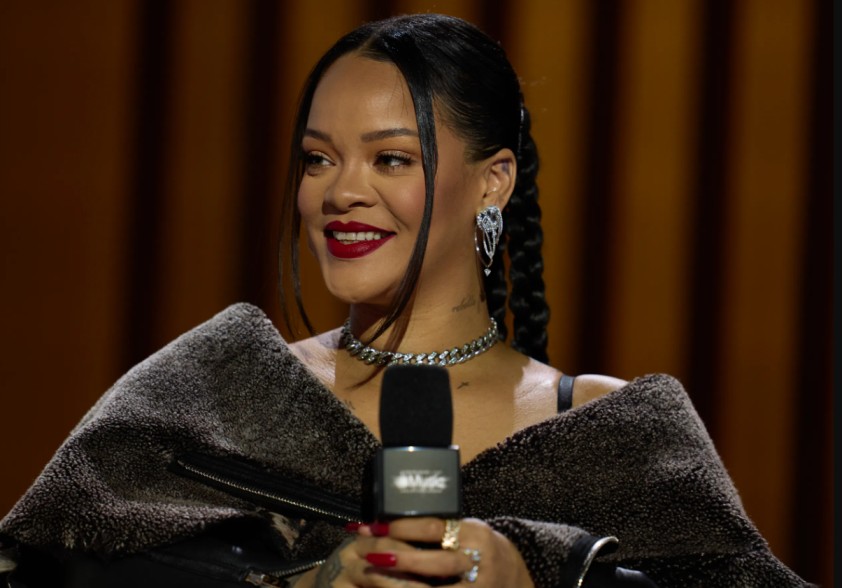
On September 8, 2017, Robyn Rihanna Fenty walked into the beauty industry and did something the $430 billion global cosmetics market had spent decades refusing to do: she counted to forty. Forty foundation shades. At launch. No pilot program, no gradual expansion, no promise to “work on diversity.” Forty shades, released simultaneously, explicitly designed to serve every skin tone the Western beauty industry had systematically ignored for generations.
When Fenty Beauty launched with 40 foundation shades, the industry treated it as revolutionary. Women of color treated it as overdue. Both reactions generated press. Together, they generated $100 million in revenue in the first two months.
Nine years later, that launch is still being cited as the single most consequential moment in modern beauty industry history. Rihanna’s net worth in 2026 stands near $1.4 billion, driven primarily by Fenty Beauty. The brand has been inducted into Time Magazine’s Best Inventions Hall of Fame not once but twice. Fenty Beauty stands as the world’s highest-earning celebrity beauty brand with over $600 million in annual revenue, 50 foundation shades serving every skin tone from albinism to the deepest complexions, and 12 million Instagram followers creating what became known as the “Fenty Effect” — a seismic industry shift pressuring every major beauty brand to expand shade ranges.
But in 2026, the same brand that rewrote the industry rulebook is facing questions it didn’t anticipate and a declining trajectory it cannot afford to ignore. LVMH is set to sell its 50% stake in Fenty Beauty. Between 2023 and 2025, Fenty Beauty’s sales began to slow, particularly in North America. Fenty Beauty made net sales of $450 million in 2024, which is impressive until you recall it made a high of over $750 million in 2023. And the broader beauty industry — the one Rihanna supposedly reformed — is, by multiple accounts, quietly backsliding on the standards she set.
The central question in 2026 is not whether Fenty Beauty changed the industry. It did. The question is whether the change was permanent — and whether Rihanna herself has remained on the right side of the bias line she drew.
The Problem She Solved: A Willful Industry Blind Spot
To understand what Fenty Beauty did, you have to understand what the beauty industry had chosen not to do for decades.
For far too long, the beauty industry marginalized darker skin tones, often relegating them to afterthoughts until a public outcry forced a rethink. Brands like YSL, Tarte, and IT Cosmetics faced significant backlash for their limited shade ranges. These controversies underscored a persistent issue: a lack of genuine commitment to diversity and inclusion.
The industry’s excuse was economic: there wasn’t sufficient demand to justify the investment in deep shade development. That argument collapsed the moment Fenty launched. Darker shades of foundation went first, challenging the notion that the consumer market in those colors wasn’t worth it to the bottom lines of beauty brands. The demand had always existed. The industry had simply decided not to serve it.
Rihanna, who grew up in Barbados surrounded by skin tones the Western beauty industry barely acknowledged, saw the gap clearly. Her solution was structural, not cosmetic — built into the product architecture from day one rather than grafted on as a marketing campaign after the fact.
What began as a vision turned into a business revolution. Fenty believes that “if you say you’re for everyone, you can’t price like you’re for the few.” Most Fenty products cost $20–40, positioning them as “affordable luxury” — more expensive than drugstore brands but cheaper than ultra-prestige, hitting the sweet spot where quality meets accessibility.
Perhaps most remarkably, the brand never used the word “inclusive” in their marketing. Instead, Fenty’s initial campaign centered around the “Beauty For All” mantra, which allowed so many women to find themselves in the brand and feel included. That distinction — showing rather than announcing — is what separated Fenty’s approach from the performative diversity campaigns that littered the industry landscape before and after it.
The Fenty Effect: Real, Documented, and Already Eroding
The immediate industry response to Fenty’s launch was both gratifying and revealing. In the year following Fenty Beauty’s launch, makeup brands began offering more shades than ever before. Maybelline introduced its SuperStay Full Coverage Foundation with 28 shades in 2018 and expanded it to 50 shades in 2019. CoverGirl launched its TruBlend Matte Made Foundation in 2018 with 40 shades. Too Faced increased its Born This Way Foundation shades to 35 in 2019 after facing criticism for being non-inclusive.
These were real changes, implemented at scale, serving real people who had previously been excluded from the category. The Fenty Effect was not theoretical. It was measurable, documented, and named by an industry that recognized it had been outmaneuvered by someone who simply chose to count higher.
But by 2024, a more complicated picture had emerged. Shade inclusivity was supposed to become table stakes, but in many ways, the industry is backsliding. “When Fenty hit the scene, it was not only a reckoning, it was also a birthing of a new acceptance and conversation at the beauty counter,” said Nyakio Grieco, a serial beauty entrepreneur and co-founder of Thirteen Lune, a retailer dedicated to Black and Brown founders.
Indie brands like Youthforia faced backlash in 2022 for launching with only two dark shades out of 15. Prada Beauty’s launch in August 2023 with only 10 out of 33 shades designed for darker skin tones raised eyebrows. The Fenty Effect, it turned out, was a moment rather than a mandate. Brands that followed its lead when the cultural pressure was highest quietly retreated when the pressure eased.
The industry learned from Fenty how to talk about inclusivity. It did not fully learn how to practice it.
The AI Dimension: A New Bias Problem With an Old Shape
This is where the Fenty story intersects with the most pressing issue in contemporary beauty and technology — and where even Rihanna’s revolution finds its limits.
As an AI ethics research scientist auditing computer vision models for bias, hidden skin tone bias in AI emerged as a critical concern. The same disparities that defined the pre-Fenty beauty industry — systematic underrepresentation of darker skin tones, algorithmic preference for lighter complexions — have been reproduced, sometimes amplified, in AI-powered beauty tools.
Rihanna’s “Fenty Effect” could teach AI developers about inclusivity and fighting bias. The launch of Fenty Beauty in 2017, with 40 foundation shades, revolutionized the industry in what has been dubbed the “Fenty Effect,” and brands now compete to show greater skin tone inclusivity. The parallel is precise and instructive: AI beauty filters, virtual try-on tools, and AI-generated campaign imagery face exactly the same structural choice that the cosmetics industry faced before 2017. They can build inclusion into the foundation of their systems from the beginning, or they can build for the default and patch in diversity later.
Most AI beauty applications, so far, have chosen the latter. The training data that underpins AI beauty filters overwhelmingly reflects Eurocentric aesthetic standards. The result is that AI-powered beauty recommendation systems, virtual makeup tools, and algorithmically curated beauty content perpetuate the same exclusions that Fenty’s 40 shades were designed to dismantle — this time at algorithmic scale and speed.
Fenty Beauty’s own digital marketing has navigated this tension more carefully than most. The brand achieved something unprecedented, becoming the only beauty product inducted into Time Magazine’s 2025 Best Inventions Hall of Fame, with 13.3 million Instagram followers, 3.3 million TikTok followers, and 1.5 million TikTok video views — metrics that reflect measurable outcomes beyond vanity numbers. But the AI beauty ecosystem surrounding it — the filters, the recommendation engines, the generative campaign tools — remains a space where the Fenty standard has not yet been met.
The Clever Marketing Argument: What the Critics Get Right
The case against Fenty Beauty as a straightforward inclusivity story rests on several legitimate observations that deserve honest engagement rather than dismissal.
First, the LVMH partnership was always a commercial relationship, not a charitable one. When Fenty Beauty launched in September 2017, it was a seismic shift in the world of luxury makeup. It wasn’t just a product line, but a cultural manifesto. In its first year, the brand generated over $550 million in revenue, with an estimated valuation of $2.8 billion. The inclusivity was genuine, but it was also extraordinarily profitable — which means it was, at minimum, convenient that the underserved market Rihanna chose to serve happened to represent an enormous untapped commercial opportunity.
Second, the brand’s expansion trajectory has introduced complexity. Rihanna has continued to build out the Fenty ecosystem with additional product lines. In July 2020, she launched Fenty Skin. In June 2024, she expanded further into the haircare market with Fenty Hair, targeting a wide range of hair types with an emphasis on repair and styling products. Each expansion has been measured against the original inclusivity standard — and results have been more mixed than the foundation launch suggested.
Third, and most structurally significant: Savage X Fenty has also faced headwinds. The CEO departed for Victoria’s Secret in 2024. Sales flattened. Forbes noted a $400 million decline in Rihanna’s estimated net worth. The empire is not invincible. And when business pressures mount, the question of whether inclusivity is a core value or a competitive strategy becomes more pointed.
Research examining Fenty Beauty’s impact on its consumers found numerous gaps in existing literature. There is no specific mention of Fenty Beauty’s impact on the consumers the company was made for — specifically Black women. The brand that built its identity on centering women of color has, in academic literature, been studied more thoroughly for its impact on the industry than for its impact on the community it claimed to serve.
The Reckoning: LVMH Exits and What It Means
The most significant development in the Fenty Beauty story in 2026 is not a product launch or a campaign. It is a corporate exit. LVMH is set to sell its 50% stake in Fenty Beauty. This decision aligns perfectly with the new strategic priorities implemented by the group led by Bernard Arnault, at a time when the high-end beauty market is experiencing a phase of maturity and saturation. LVMH has not issued official statements, but the rationale behind the choice is clear. In a context of slowed growth, with a 4% decline in revenue in the first nine months of 2025, the group prefers to focus only on assets that strengthen its core holdings such as Dior and Sephora.
The departure of LVMH leaves Fenty Beauty at a crossroads. Forbes’ 2025 list of America’s Richest Self-Made Women showed Rihanna’s wealth declining from approximately $1.4 billion to $1 billion, a 29% drop. Several factors contributed: the CEO departure from Savage X Fenty, flat Fenty Beauty sales, LVMH describing the Chinese market launch as facing a “challenging environment,” and a broader market correction with investor enthusiasm declining for influencer-driven products.
The beauty brand that revolutionized an industry now faces what every revolutionary eventually faces: the gap between the founding moment and the institutional reality that follows it.
The Verdict: Both True, Both Incomplete
The most honest assessment of Rihanna’s Fenty revolution is that it was genuinely transformative, commercially motivated, structurally inclusive, and institutionally limited — all at the same time, and none of those characterizations cancels the others.
Rihanna held approximately 57% of Fenty Beauty, and at a $2.8 billion valuation, her share alone represents roughly $1.6 billion in paper wealth from this single asset. Fenty Beauty didn’t just succeed — it changed the industry. Within months of launch, competitor brands rushed to expand their shade ranges. That change was real, measurable, and long overdue. The fact that Rihanna also made billions from it does not diminish the impact on the women who finally found their shade after decades of being told the market didn’t care about them.
But the limits are equally real. The industry is backsliding. AI beauty tools are reproducing the pre-Fenty bias at algorithmic scale. The LVMH exit introduces ownership uncertainty at the moment when the brand needs strategic stability most. And the academic literature that should document Fenty’s impact on its intended community remains thin.
Was Fenty Beauty declining? Yes, objectively yes. The parent company desires an exit, sales are dwindling, quality issues are on the increase, and the net worth of Rihanna suffered a loss. Those are facts, not opinions. But this is where Rihanna comes in: she is a survivor. She has pivoted before. She has come back from worse.
That resilience is the most Rihanna thing about the entire story. She identified a problem the industry refused to solve, built a $2.8 billion business solving it, and created a standard that bears her name nearly a decade later. The fact that the standard is now under pressure does not erase what it achieved. It simply confirms what every genuine revolution eventually discovers: changing an industry is easier than keeping it changed.
In the AI age, with beauty bias migrating from the cosmetics counter to the algorithm, the question Fenty Beauty raised in 2017 is more relevant than ever. The beauty industry’s willingness to answer it honestly — without Rihanna forcing the issue again — will determine whether the Fenty Effect was a revolution or merely the most profitable moment of an industry’s brief, convenient conscience.
Key Facts: Fenty Beauty launched September 8, 2017, with 40 foundation shades. It generated $100 million in its first 40 days. The brand is now valued at approximately $2.8 billion with 50 foundation shades. Rihanna holds approximately 50–57% ownership. LVMH is selling its 50% stake as of 2026. Fenty Beauty’s annual revenue peaked at approximately $750 million in 2023 and declined to approximately $450 million in 2024. Rihanna’s net worth in 2026 is estimated at $1.4 billion, down from a peak of approximately $1.4 billion in 2021. Fenty Beauty was named Time Magazine’s Best Invention of 2017 and inducted into its 2025 Best Inventions Hall of Fame.






Be First to Comment