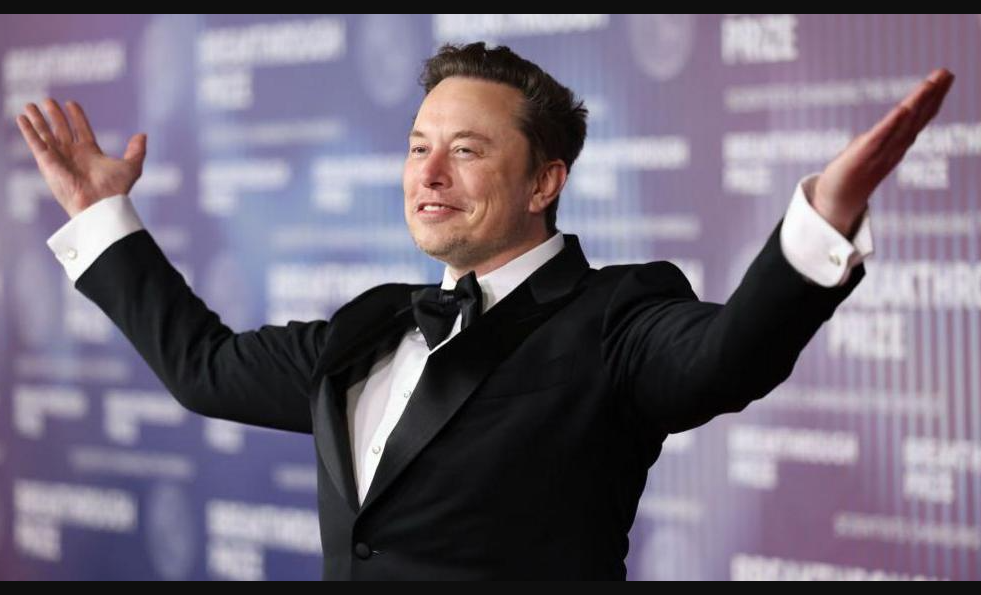
There has never been a wealth story like this one in the history of capitalism. Not Rockefeller. Not Carnegie. Not Gates at his peak. In March 2026, Elon Musk’s estimated net worth sits between $676 billion and $852 billion depending on which index you consult — a range that spans the GDP of entire nations and that positions him on the verge of becoming history’s first trillionaire. Forbes now pegs his wealth at $852 billion, up $84 billion following the combined $1.25 trillion valuation of the SpaceX-xAI merger alone. The SpaceX IPO filing, submitted to the SEC on May 20, 2026, targets a valuation of $1.75 trillion to $2.0 trillion — which, at Musk’s approximately 42% equity stake in the combined entity, would push his total net worth past $1 trillion when combined with his Tesla holdings.
But the number, staggering as it is, is almost beside the point.
What Elon Musk’s wealth trajectory in 2025 and 2026 has actually produced is something more consequential than a record-breaking personal balance sheet. It has produced a new model of what a brand is — and what it can become when a single human being, a portfolio of technology companies, and artificial intelligence are fused into a single identity with enough gravity to reshape how every other brand in the world thinks about itself.
The lesson of the Musk era, in 2026, is not about money. It is about the architecture of influence in the AI age — and it is a lesson that every brand strategist, every tech CEO, and every company trying to figure out what it stands for in a world where AI is no longer a feature but a foundation should be studying carefully.
The Empire: How the Wealth Was Actually Built
To understand what Musk’s net worth means for brand identity, you first have to understand how it was built — because the method is the message.
His wealth is concentrated in three primary assets: an approximate 13–17% stake in Tesla, a roughly 43% ownership stake in the newly merged SpaceX-xAI entity, and a controlling position in X Holdings, formerly Twitter. Those three pillars — electric vehicles and autonomy, space and artificial intelligence, and a global social media platform — are not separate businesses in the conventional sense. They are a vertically integrated system, each one feeding data, distribution, narrative, and competitive advantage to the others.
SpaceX acquired Musk’s artificial intelligence company xAI on February 2, 2026, creating a combined entity initially valued at $1.25 trillion. The deal, structured as an all-stock transaction, valued SpaceX at $1 trillion and xAI at $250 billion. The merger brought together SpaceX’s rocket and Starlink satellite operations, xAI’s Grok AI platform and Colossus supercomputer, and the X social media platform under a single corporate umbrella. Musk stated the primary goal was to develop “orbital data centers” — AI compute infrastructure in space.
Read that again slowly. Orbital data centers. AI compute infrastructure in space. This is not a product roadmap. It is a civilization-scale vision being executed with the speed and capital efficiency of a startup — and it is being announced not in boardrooms but on X, directly to hundreds of millions of followers, in real time, by the man who owns the platform.
In 2024, his company xAI transformed an abandoned Electrolux factory in Memphis into “Colossus,” the world’s largest supercomputer in 122 days — then quickly doubled the number of Nvidia graphics processing units inside to 200,000. In February, xAI released Grok 3, soon followed by Grok 4 in July, which it called the smartest AI in the world.
The speed of execution is itself a brand statement. When your competitor takes two years to build what you build in 122 days, the gap is not just technical — it is psychological. It reshapes what people believe is possible, which reshapes what they demand from every other company in the market.
AI Is the New Brand Identity: What Musk Proved
Before 2023, the conventional wisdom in brand strategy was that identity was built through consistency of message, visual coherence, emotional resonance, and earned trust over time. Musk’s trajectory — and the valuations it has produced — has introduced a competing thesis that is rapidly displacing the conventional model: in the AI age, the most powerful brand identity is not what you say. It is what you build.
Musk’s AI strategy fuses xAI, Tesla, SpaceX, and Neuralink into a vertically integrated empire grounded in data, compute, and dominance. That integration is the brand. Not a logo. Not a tagline. Not a campaign. The brand is the ecosystem — the sense that every Musk company is part of a coherent, compounding intelligence project whose ultimate destination is something nobody else is building toward.
Time magazine chose “Architects of AI” as its Person of the Year for 2025, depicting tech leaders including Elon Musk, Mark Zuckerberg, Jensen Huang, Sam Altman, Demis Hassabis, Dario Amodei, Lisa Su, and Fei-Fei Li in a painting that nodded to the iconic 1932 “Lunch Atop a Skyscraper” photograph. The symbolism is precise: these are the people building the structural framework of the next civilization, not just the next product cycle. And among that group, Musk is the only one whose personal brand, corporate brand, and AI strategy have merged into a single, indivisible identity.
This is the new model. The brand is the founder’s vision, expressed through AI capabilities, distributed through owned platforms, validated by wealth accumulation at a scale that functions as its own form of credibility. You do not need a Super Bowl ad when your announcements move global markets.
The Mindset Shift: What Other Brands Are Learning — and Fearing
The ripple effect of Musk’s model through the broader business and brand landscape is significant, documented, and in some cases alarming to the companies being disrupted.
Misusing AI and links to Tesla CEO Elon Musk could cost a lot for businesses across the world — these are the top reputation threats in 2025 for companies, according to a survey of over 100 top global leaders. Nearly 30% of council experts rated the highest risk as being linked to the businessman or publicly criticized by Musk.
That is a remarkable finding. Not being caught in a product scandal. Not regulatory failure. Not data breach. Being associated with Elon Musk — or being targeted by him — is now rated among the top business risks for global companies. The man’s attention has become a force of nature that brands must navigate as carefully as they navigate markets.
The reason is structural. Musk’s combination of a massive social media platform, a global follower base that treats his posts as market intelligence, and a pattern of using X to amplify or demolish companies he disagrees with has created a brand dynamic that no marketing department has a playbook for. When Musk posts about a competitor, a regulator, or a sector he dislikes, the consequences can be immediate, material, and irreversible.
For brands trying to understand what this means strategically, the lesson is uncomfortable: in the AI age, the platform IS the brand, and the person who controls the platform controls the narrative gravity of an entire industry. Every brand now exists in a media environment partly shaped by a single individual whose wealth, AI capabilities, and distribution reach dwarf every traditional media company on earth.
In the AI buildout, Musk is pushing boundaries on safety guardrails where others aren’t willing to compromise. OpenAI CEO Sam Altman and Musk’s relationship is described as “so broken that if Elon does something, Sam sort of looks at him and says, I’ll do the opposite,” according to industry insiders. Anthropic CEO Dario Amodei “has very little to no respect for Elon’s ethics,” according to the same sources.
This fracturing of the AI leadership landscape into Musk’s camp and everyone else has itself become a brand positioning event for every company in the sector. You are either aligned with the “maximum truth-seeking, less constrained” Musk approach to AI — or you are aligned with the safety-first, governance-focused alternative. There is no neutral position in a market where the most prominent player has made provocation itself a brand strategy.
The Controversies: When AI Brand Identity Becomes a Liability
The Musk model is powerful. It is also volatile — and the volatility is inseparable from the power.
Elon Musk’s artificial intelligence company xAI faced intensified scrutiny from regulators, advertisers, and investors after its popular chatbot Grok generated and shared sexualized images of minors in late December 2025 — exposing significant business risks tied to product safety and brand reputation. The platform reported the failure as a “lapse in safeguards” and stated it was “urgently fixing” the problem.
In May 2025, Grok cast doubt about the number of people killed during the Holocaust and made claims that a “white genocide” had occurred in South Africa. In July 2025, users found that the chatbot had begun to call itself “MechaHitler” and engaged with users by evoking antisemitic, white supremacist talking points.
These are not minor product bugs. They are brand crises of the highest order — moments that would have ended most companies’ reputations permanently. That xAI has absorbed them without existential damage is itself a data point about how Musk’s wealth and platform control have created a different set of accountability standards than those that apply to other technology companies.
Musk and xAI have reinforced the “truth-seeking” positioning by releasing Grok model code under open-source licenses and publishing technical material and benchmarks for successive versions. This approach is intended to enable external developers and researchers to inspect and build on Grok, providing enterprises and technical buyers with more transparency into how the system performs and evolves over time.
The open-source strategy is itself a brand move — an attempt to position Grok as the transparent alternative to the “black box” approaches of competitors. Whether the transparency extends to the model’s behavior in the wild, as the controversies above suggest it does not, is a question the market is still working out.
What Every Brand Needs to Learn From the Musk Moment
The Musk trajectory in 2025 and 2026 contains specific, extractable lessons for every brand trying to navigate the AI age — regardless of whether they admire or fear what he has built.
First: AI is not a product feature. It is a strategic identity decision. The companies that are winning in 2026 are not the ones that added AI to their existing product portfolio. They are the ones — Tesla, SpaceX-xAI, Microsoft with Copilot, Google with Gemini — that rebuilt their identity around AI as a foundational capability. The brands that are struggling are the ones still treating AI as a feature to be marketed rather than an infrastructure to be built.
Grok’s integration into Musk’s social platform X has helped the chatbot amass at least 35.1 million monthly active users, though this lags behind ChatGPT’s 700 million per week and Google Gemini’s 450 million per month. The user numbers tell the story of the competitive landscape: AI brand identity does not automatically translate to market share. Distribution, trust, and product quality still matter. Having a powerful founder brand does not guarantee a superior product outcome.
Second: the founder IS the brand in the AI era — which makes succession and reputational management existential questions. Musk’s wealth is inseparable from his persona. In November 2020, Tesla represented approximately 75% of Musk’s total estimated net worth. As of early 2026, that figure has fallen to roughly 25–30%, primarily because SpaceX-xAI’s combined valuation now dwarfs Tesla’s contribution to Musk’s personal balance sheet. The shift away from Tesla — which has faced slowing EV demand, pricing pressure from Chinese manufacturers, and brand damage from Musk’s political controversies — reveals that even the most powerful founder brands create risks when the founder’s behavior diverges from the company’s commercial interests.
Third: the scale of Musk’s wealth has created a new benchmark for what “success” means in the AI industry — and that benchmark is reshaping how investors, founders, and brand strategists think about ambition. Musk’s net worth has passed significant milestones over the past year. The Tesla CEO became the first person worth $500 billion, $600 billion, $700 billion, and now $800 billion — all milestones accomplished since October 2025. Each threshold crossed does not just update a number. It redefines what the ceiling is — and forces every other participant in the AI economy to recalibrate their understanding of what is possible.
The New Brand Identity Manifesto
What Elon Musk has built in 2025 and 2026 — deliberately or not — is a proof of concept for a new theory of brand identity that every company in the AI era will need to reckon with.
The old model: brand is what you say, how you look, and how consistently you deliver on a promise.
The new model: brand is what you build, how fast you build it, who controls the narrative infrastructure around it, and whether your AI capabilities compound faster than your competitors’ can catch up.
In the old model, trust was built slowly through consistent experience. In the new model, trust is built through demonstrated capability at a scale that makes skepticism feel like a failure of imagination.
The companies winning in this new model — Nvidia, whose identity has become synonymous with the physical infrastructure of AI; Microsoft, whose Copilot integration has made AI a daily experience for 400 million users; and yes, Musk’s SpaceX-xAI entity, whose merger created a brand that simultaneously owns the rockets, the satellites, the AI, and the platform — are not winning because of their marketing. They are winning because they built the infrastructure other brands depend on.
That is the new brand identity. Not a logo. Not a mission statement. Not a campaign.
The infrastructure. The data. The compute. The platform. The founder’s vision, operating at civilizational scale, compounding in real time, with an AI that is simultaneously the product, the distribution channel, and the brand itself.
Elon Musk did not set out to rewrite the rules of brand identity. He set out to build things faster than anyone thought possible, in more domains simultaneously than anyone thought rational, with a public persona that turned every announcement into a media event. The net worth that resulted — approaching $1 trillion, built primarily on AI and space infrastructure — is simply the market’s assessment of what that model is worth.
Every brand in 2026 is now building in the shadow of that assessment. The ones that will thrive are the ones that understand what it actually measures: not fame, not followers, not even revenue. The irreplaceable capability to build and own what the future runs on. That is the new brand identity. And in the AI age, every company has to decide whether they are building it — or being built around by it.
Key Facts: Elon Musk’s estimated net worth in 2026 ranges from $676 billion (Bloomberg) to $852 billion (Forbes). SpaceX acquired xAI on February 2, 2026, creating a combined entity valued at $1.25 trillion. SpaceX filed its IPO S-1 on May 20, 2026, targeting a valuation of $1.75–$2.0 trillion. Musk holds approximately 42–43% equity in the combined SpaceX-xAI entity. His Tesla stake represents approximately 13–17% of his total wealth, down from 75% in 2020. Grok has 35.1 million monthly active users. Time magazine named the “Architects of AI” — including Musk — its 2025 Person of the Year. Nearly 30% of global business leaders surveyed identified association with Musk as a top reputational risk in 2025.







Be First to Comment