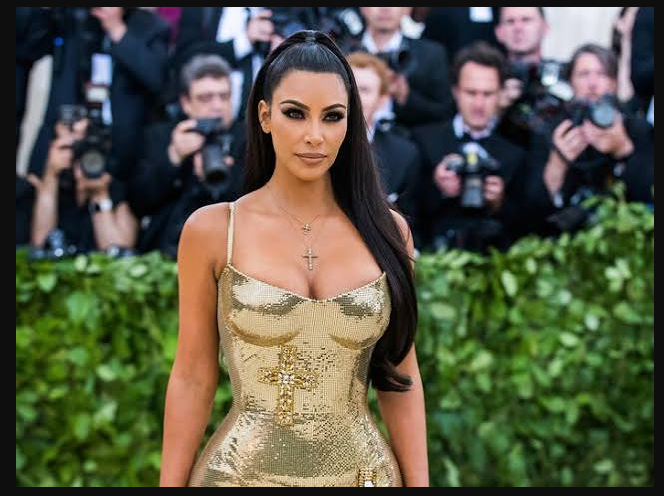
In November 2025, Goldman Sachs led a $225 million funding round that valued Kim Kardashian’s SKIMS at $5 billion. Six years earlier, the brand launched with a single product category — shapewear — and a founder whose business credentials were, to put it generously, untested. Today, SKIMS is one of the most valuable private apparel brands in the world, with revenue that has more than quintupled over three years, climbing from about $145 million in 2020 to nearly $750 million in 2023, with projections surpassing $1 billion in net sales for 2025. The numbers are not in dispute. What is in dispute — loudly, increasingly, and with genuine stakes — is what those numbers actually represent. Is SKIMS a genuinely inclusive revolution in how women’s bodies are dressed and celebrated? Or is it the most profitable iteration yet of a very old industry trick: making women feel inadequate, then selling them the solution?
The answer, in 2026, is complicated by a new variable that neither the brand’s defenders nor its critics fully anticipated. Artificial intelligence has entered the conversation — and it is making both sides of the argument harder to make cleanly.
The Empire: What SKIMS Has Actually Built
Before engaging the criticism seriously, the scale of what SKIMS has constructed deserves honest acknowledgment. SKIMS now operates 18 company-owned stores in the United States and two franchise locations in Mexico, reinforcing its omnichannel strategy. Internationally, SKIMS is expanding into Europe and the Middle East, with standalone stores planned for London’s Regent Street and Dubai by mid-2026.
SKIMS was founded in 2019 by Kim Kardashian and Jens Grede, and the business model has been consistently smart. Customer retention has been a major strength, with about 14 percent of customers returning within 15 months of their first purchase — a strong signal of brand loyalty. The brand has also formed high-profile partnerships, including becoming the official underwear partner for the NBA, WNBA, and USA Basketball.
The most significant recent development arrived in February 2025, when Nike signed a long-term partnership with SKIMS to launch a new brand called NikeSKIMS, introducing a collection of apparel, footwear, and accessories with a global rollout planned for 2026. The NikeSKIMS launch in September 2025 was a cultural event unto itself: a debut film featuring over 50 athletes including Serena Williams, Sha’Carri Richardson, Chloe Kim, and Kim Kardashian herself, spanning seven collections and 58 silhouettes with over 10,000 possible combinations. Within 48 hours, the #SkimsxNike tag hit 12 million views on TikTok, and according to Launchmetrics, the reveal generated $6.1 million in media impact value.
Kardashian retains the largest ownership stake in SKIMS, with Forbes estimating her net worth at $1.7 billion, largely driven by her 35% stake in the company. Nearly 70% of SKIMS customers are millennials or Gen Z consumers.
These are not the metrics of a celebrity vanity project. This is a serious business with institutional investors, a coherent product strategy, and a customer base that keeps coming back. The question is not whether SKIMS is successful. It demonstrably is. The question is what it is succeeding at.
The Genius Branding Argument: Inclusivity as Infrastructure
The most compelling case for SKIMS as genuinely progressive branding rests on what it did structurally, not just rhetorically.
The brand’s campaigns are filled with models of all shapes, sizes, and ethnicities, sending a clear message. SKIMS also featured real women, including those with disabilities, in their ads. The product range offers sizes from XXS to 4X and caters to various skin tones, with shoppers able to see additional sizes in product photos to visualize the product on a model closer to their size.
This matters because the fashion industry’s historical approach to “inclusivity” was largely performative — a token larger-bodied model in a campaign otherwise populated by a narrow range of body types. SKIMS built its size range into the product architecture from the beginning, not as a marketing addition but as a commercial foundation. That decision, made at launch, is meaningfully different from brands that retrofit inclusivity after years of exclusion.
NikeSKIMS proves that in 2025, brand collaborations aren’t just about crossing audiences — they’re about reshaping identity, mutually, visibly, and emotionally. Nike leaned into a softer, more inclusive definition of strength. SKIMS evolved from loungewear to performance fashion.
The NikeSKIMS “Bodies at Work” campaign, whatever its critics said about it, featured elite female athletes whose bodies represent genuine physical achievement rather than aesthetic conformity. That Serena Williams and Sha’Carri Richardson appear in a campaign for a shapewear brand’s athletic line is, on one reading, a meaningful shift in what bodies get celebrated and why.
The Body-Shaming 2.0 Argument: The Face Wrap Heard Round the Internet
Then came the face wrap.
In 2025, SKIMS launched its “Ultimate Face Wrap,” marketed as a collagen-infused, sculpting headpiece meant to “snatch your chinny chin chin” while you sleep. It sold out within hours of launch, despite widespread backlash. Social media users compared it to Hannibal Lecter’s muzzle, and comedian Celeste Barber captured the cultural mood precisely: “SKIMS — a company so successful at making us hate our body, they’ve now moved onto our face.”
That product, and the backlash it generated, crystallized the core tension at the heart of SKIMS’ brand identity. A company that markets itself on the language of empowerment and body positivity was selling a device designed to reshape your jaw while you sleep. The message, however elegantly packaged, was: your face, as it is, is not enough.
One viral comment summed up the sentiment: “SKIMS — making women feel bad about themselves since 2018.”
This is not an isolated critique. Despite Kardashian’s statements about her commitment to inclusivity and empowerment, her silence on labor rights drew backlash from feminist and sustainability advocates alike, with online campaigns like #PayYourWorkers trending on social media. The brand’s use of fossil fuel-based synthetic fabrics has drawn environmental criticism as well, with activists noting the contradiction between body-positive messaging and planet-negative materials.
The NikeSKIMS campaign itself was not immune. Reviewers noted that “Bodies at Work,” while visually stunning and star-powered, veered into aesthetic worship that didn’t quite shake off the charge of objectification. At its best, the ad elevated female athletes and reframed their bodies as symbols of power and resilience. At its worst, it became performative.
The AI Variable: Where This Gets More Complicated
What makes this debate particularly acute in 2026 is the role that artificial intelligence now plays in shaping beauty standards — and SKIMS exists squarely at the intersection of celebrity culture, digital marketing, and AI-generated imagery.
Dove’s 2024 global report found that two in five women would give up a year of their life to achieve an ideal look or body, and that while beauty ideals have diversified over the years, the checklist is growing and increasingly impossible to meet. Two in three women believe women today are expected to be more physically attractive than their mother’s generation. That intensification of beauty pressure is happening in the same cultural moment that AI image generation, AI beauty filters, and algorithmically curated social media feeds are reshaping what “normal” looks like at scale.
AI beauty filters may inadvertently uphold damaging age, racial, and gender biases by consistently endorsing appearances that are younger and fair-skinned. Constant exposure to idealized AI-generated images can negatively impact self-esteem and body image, leading to feelings of inadequacy.
SKIMS did not create this dynamic. But it operates within it and benefits from it. The brand’s marketing machine — one of the most sophisticated in consumer fashion — runs across the same platforms where AI-generated body ideals are proliferating. When SKIMS’ campaigns appear in feeds alongside AI-filtered images of impossible physiques, the cumulative effect on how women perceive their own bodies is not something any single brand controls, but it is something every brand in that space is implicated in.
The irony is precise: a brand built on the language of body acceptance is selling products whose entire value proposition depends on the gap between how your body looks naturally and how it could look with intervention. That gap — between the body you have and the body SKIMS can help you achieve — is the product. The empowerment language is the marketing.
The Verdict: Both Things Are True
The most honest assessment of SKIMS in 2026 is that it has done something genuinely progressive and something genuinely problematic, simultaneously and without apparent contradiction.
On the progressive side: it built size inclusivity into its product architecture at launch, not as an afterthought. It made garments for a range of skin tones when the industry largely did not. It put elite female athletes — not just conventionally beautiful ones — at the center of its highest-profile campaign. It created a product category that many women report genuinely improves how they feel in their clothes. With diversity, inclusivity, and female empowerment as its watchwords, SKIMS has revolutionized shapewear and appealed to a very wide audience.
On the problematic side: its core business model depends on the premise that your body requires smoothing, sculpting, and reshaping. The face wrap expansion revealed an appetite for creating new insecurities to solve commercially. Its environmental record contradicts its empowerment positioning. And it operates in an AI-saturated media environment where the line between celebrating real bodies and selling digitally perfected ones is increasingly difficult to locate.
The controversy around NikeSKIMS may be the point — by sparking debate, SKIMS ensures its campaigns aren’t just glossy montages but cultural conversation pieces. In the attention economy, that’s half the battle.
That sentence, read carefully, tells you everything about where SKIMS sits in the contemporary media landscape. The controversy is a feature, not a bug. The debate about whether it empowers or exploits is itself a form of marketing. And the fact that this article exists — analyzing a brand whose net worth just crossed $5 billion — is evidence that the strategy works.
The question consumers, critics, and investors need to sit with is a harder one: can a business model built on closing the gap between the body you have and the body you want ever be genuinely body-positive? Or is that gap — and the insecurity that sustains it — the product that was always for sale?
In the AI age, where that gap is being algorithmically widened by image generators and beauty filters at a scale no brand has faced before, the answer matters more than the revenue figures suggest.
Key Facts: SKIMS was founded in 2019 by Kim Kardashian and Jens Grede. It reached a $5 billion valuation in November 2025 after raising $225 million led by Goldman Sachs. Revenue is projected to exceed $1 billion in net sales for 2025. The NikeSKIMS collaboration launched September 26, 2025. Kim Kardashian holds approximately a 35% stake, contributing to her estimated $1.7 billion net worth. SKIMS serves sizes XXS to 5XL across 18 U.S. store locations and a growing international footprint.







Be First to Comment