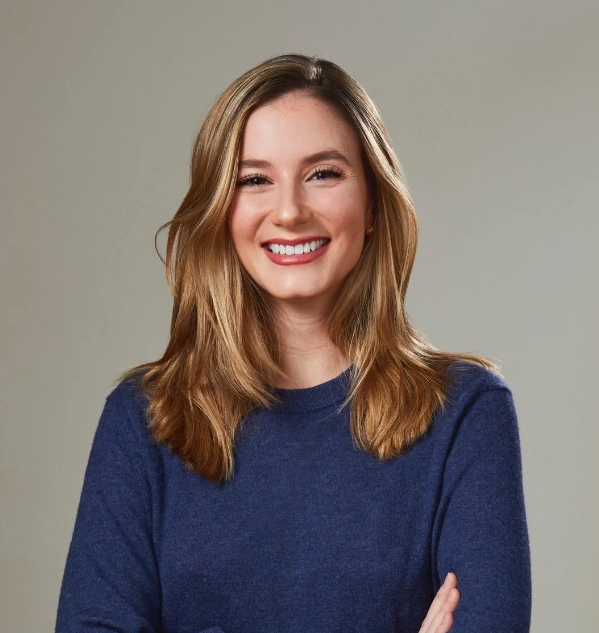
In the volatile arena of financial innovation, where information is currency and probabilities are traded like stocks, Luana Lopes Lara has crowned herself the undisputed Prediction Market Queen. At just 29–30 years old in 2026, the Brazilian-born co-founder and COO of Kalshi has built a federally regulated platform that lets users bet on real-world events—from presidential elections and economic indicators to sports outcomes, celebrity gossip, and entertainment awards—turning collective wisdom into tradable contracts. Her stake in the company, valued at billions, has made her the world’s youngest self-made woman billionaire. Yet her boldest wager isn’t just on market volume; it’s on the fusion of prediction markets with AI, positioning Kalshi at the frontier of what some call the next evolution of gambling, forecasting, and decision-making.
Is this a transformative leap toward more accurate, efficient, and democratized intelligence—or a high-stakes gamble that risks blurring lines between investing, entertainment, and addictive speculation? This deep dive explores Lara’s remarkable journey, Kalshi’s mechanics and meteoric rise, the role of AI in its future, regulatory battles, societal implications, and what her vision means for the broader economy.
From Ballet Studio to MIT: Discipline Forged in Fire
Luana Lopes Lara’s path to fintech dominance began far from Wall Street. Born in 1996 in Brazil, she trained rigorously as a ballerina at the Bolshoi Theater School, enduring intense physical and mental discipline that would later define her entrepreneurial grit. Teachers tested her resolve with extreme measures, such as holding lit cigarettes under her extended leg to build pain tolerance and focus.
This early intensity shaped a mindset of precision and resilience. She transitioned to academics, earning a degree in computer science from the Massachusetts Institute of Technology (MIT). During college, Lara interned at elite hedge funds like Bridgewater Associates (Ray Dalio’s firm) and Citadel Securities, gaining exposure to quantitative trading, risk analysis, and probabilistic thinking.
At MIT, she met co-founder Tarek Mansour. In 2018, inspired by rampant online speculation about Kylie Jenner’s pregnancy, they launched Kalshi to channel public curiosity into structured, regulated markets. The insight was simple yet powerful: people already bet informally on events; why not create a legal, transparent platform to harness that for better forecasting and financial opportunity?
Building Kalshi: The Regulated Prediction Market Pioneer
Kalshi emerged as the first federally regulated prediction market in the U.S., approved by the Commodity Futures Trading Commission (CFTC) after years of legal battles—including suing their own regulator for the right to offer election contracts. Unlike unregulated offshore platforms like Polymarket, Kalshi operates under strict oversight, emphasizing compliance, consumer protection, and verifiable outcomes.
How Kalshi Works:
- Users buy “Yes” or “No” contracts on binary (or multi-outcome) events. For example, “Will interest rates be cut by X date?” or “Will Team A win the championship?”
- Contracts settle at $1 if Yes, $0 if No, allowing clear pricing of probabilities (e.g., a 75-cent Yes contract implies 75% likelihood).
- Categories span politics, economics, sports, weather, entertainment, and more.
- Features include liquidity provision, risk management tools, and data APIs for institutions.
Kalshi exploded in popularity during the 2024 U.S. elections and has since scaled dramatically. By 2026, it reports massive monthly volumes—billions in trades—with sports betting forming a significant portion of revenue. The platform has attracted institutional interest, with its data reportedly outperforming traditional forecasts like those from the Federal Reserve in certain economic predictions.
Valuation milestones include an $11 billion mark in late 2025 after a $1 billion funding round led by Paradigm, with participation from Sequoia, Andreessen Horowitz, and others. Lara’s approximately 12% stake propelled her into billionaire status, surpassing previous records for youngest self-made women.
The AI Gamble: Supercharging Prediction Markets
Lara’s high-stakes bet extends deeply into AI integration. Kalshi has deployed an internal AI agent named Harrison (built on Anthropic’s Claude) to stress-test contract language, flag ambiguities, suggest new markets, monitor news, and assist in resolutions. This tool helps scale operations amid surging volumes—handling millions of daily wagers while maintaining regulatory standards.
AI’s Role in Kalshi’s Future:
- Market Creation & Curation: AI analyzes trends, news, and user interest to generate compliant, engaging contracts rapidly. The company maintains hundreds of templates reviewed by humans and AI.
- Risk Management: Real-time anomaly detection for insider trading, manipulation, or unusual activity.
- Personalization & Accessibility: Smarter interfaces, predictive recommendations, and educational tools for retail users.
- Data Superiority: Aggregating human bets with AI analysis could yield hybrid forecasting models superior to polls or expert opinions.
- Expansion: Potential for AI-driven derivatives, automated hedging, or enterprise forecasting tools for businesses and governments.
Lara envisions prediction markets becoming “bigger than the stock market” because they are more intuitive and tied to human events. With AI, this could evolve into a global “wisdom engine,” where crowd-sourced probabilities inform policy, investing, and strategy.
Regulatory Battles and Ethical Tightrope
Kalshi’s journey hasn’t been without friction. The company fought the CFTC for election market approvals and navigates ongoing legal and state-level challenges. Critics worry about gambling addiction, market manipulation (especially in politics or sports), and the platform’s potential to amplify misinformation or insider advantages.
Lara and team emphasize responsible design: age gates, spending limits, clear risk disclosures, and robust monitoring. They position Kalshi as distinct from pure gambling—more akin to information markets that improve collective accuracy. Sports betting dominates revenue for many platforms, raising questions about whether prediction markets are truly “smarter gambling” or rebranded entertainment.
Leadership Style and Personal Philosophy
As COO, Lara brings operational rigor and product intuition honed from her engineering background and ballet discipline. She maintains intense work habits while advocating for calculated risk-taking, especially for women in tech. Her story—from immigrant roots and artistic training to fintech titan—inspires many, though it also invites scrutiny in a male-dominated industry.
She credits mentors, persistence through rejections, and a probability-focused mindset for her success. Public appearances highlight her vision for transparent, useful markets that democratize forecasting power previously reserved for elites.
Broader Impact: Forecasting the Future Economy
Prediction markets like Kalshi have proven valuable in aggregating dispersed knowledge. During elections and economic uncertainty, they often provide sharper signals than traditional polls. With AI augmentation, accuracy could improve further, potentially influencing:
- Corporate strategy and hedging.
- Policy-making and risk assessment.
- Media and public discourse.
- Global finance, as more jurisdictions regulate or adopt similar platforms.
However, challenges remain: liquidity in niche markets, regulatory fragmentation, ethical concerns around sensitive events (e.g., geopolitics, health), and the risk of turning serious issues into speculative entertainment.
Lessons from the Prediction Market Queen
- Bet on Your Edge: Lara turned personal curiosity (celebrity gossip) and quantitative training into a multibillion-dollar category.
- Regulatory Persistence Pays: Fighting for compliance built moats and legitimacy.
- Embrace Technology Multipliers: AI isn’t a replacement for human insight but a powerful accelerator.
- Discipline Compounds: Ballet-honed focus translates to startup endurance.
- Balance Innovation with Responsibility: Scale responsibly amid societal risks.
The Future: AI-Powered Prediction Dominance?
Lara’s high-stakes bet appears to be paying off handsomely. As AI agents proliferate and real-time data explodes, platforms that combine human judgment with machine efficiency could redefine how societies anticipate and respond to uncertainty. Kalshi’s trajectory suggests prediction markets may evolve from niche trading venues into foundational infrastructure for an information-rich world.
Whether this future elevates collective intelligence or normalizes widespread speculation depends on thoughtful governance—something Lara and her team are actively shaping. For now, the Prediction Market Queen continues placing calculated wagers, proving that disciplined vision can turn probabilities into empires.
In an era of accelerating change, Luana Lopes Lara isn’t just betting on the future—she’s building the marketplace where that future is priced in real time.






Be First to Comment