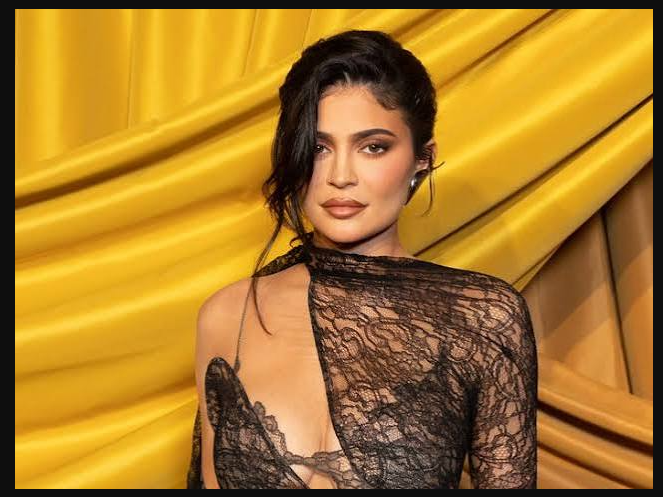
On November 30, 2015, a 18-year-old with no business degree, no manufacturing experience, and no traditional retail infrastructure listed three shades of lip liner and liquid lipstick on a website. She produced just 5,000 units of each shade, priced at $29. They sold out in minutes. Within eighteen months, Kylie Cosmetics generated over $420 million in revenue. By 2019, Forbes had declared her the youngest self-made billionaire in history. By 2020, Forbes had retracted the claim entirely, citing what its reporters called “white lies, omissions and outright fabrications” in the financial documents her team had provided.
By 2026, Kylie Jenner has an estimated net worth of $670 million to $750 million, commands 393 million Instagram followers — making her the most followed Gen Z celebrity on the platform — and runs a consumer empire spanning cosmetics, skincare, baby products, swimwear, fashion, and a canned vodka soda brand. She is simultaneously one of the most commercially successful young entrepreneurs in American history and the most frequently cited example of what critics call the “nepo baby economy.”
Both things are true. The question is which one matters more — and in the AI age, the answer is becoming harder to separate from the algorithm that made it all possible.
The Origin Story: 5,000 Units and a Smartphone
The mechanics of Kylie Jenner’s original success were, in retrospect, a blueprint for the entire influencer to brand pipeline that has reshaped the consumer economy since 2015.
Kylie outsourced manufacturing to Seed Beauty. She had no factories, no warehouses, and no traditional retail distribution. What she had was approximately 400 million social media followers and the ability to announce a product launch directly to an audience the size of a medium-sized country. The business model was revolutionary for its simplicity: eliminate the middleman, sell directly to a pre-built audience, and use scarcity to manufacture demand.
The initial success of the Kylie Lip Kits was the turning point for the industry on multiple levels — it changed how brands thought about leveraging social media to build buzz and opened the floodgates for a new generation of celebrity beauty brands. Those who followed in her wake include members of her own inner circle: Bella Hadid with Orabella and Hailey Bieber with Rhode, which sold for $1 billion in 2025.
The brand that Kylie built was not built on product innovation. The lip kits were well-made but not technically groundbreaking. What they were built on was something more intangible and more powerful: cultural proximity. At the height of Keeping Up with the Kardashians’ dominance, Kylie Jenner’s lips were among the most discussed physical features in popular culture. She had denied having lip fillers for years before admitting to them in 2015 — the same year the lip kits launched. The timing was either extraordinary coincidence or extraordinarily calculated marketing. The market did not particularly care which.
The Forbes Controversy: Self-Made or Carefully Made?
The most instructive chapter in the Kylie Jenner empire story is not the rise. It is the reckoning.
In 2020, Forbes published a detailed investigation citing glaring discrepancies between information privately supplied to journalists and information publicly supplied to shareholders. Jenner’s team had told Forbes that 2018 sales were approximately $360 million. Coty’s publicly available investor filings showed 2018 sales were approximately $125 million. Jenner’s team claimed Kylie Skin’s launch generated $100 million in revenue in its first six weeks; Coty filings showed the line was on track to finish the year at just $25 million.
Forbes published a high-profile retraction, revealing that Kylie’s business had been significantly smaller than her team had suggested, and the headline-grabbing “self-made billionaire” label was officially revoked.
Jenner’s legal team fought back hard. Her attorney Michael Kump called the article “filled with outright lies,” and specifically denied that Kylie and her accountants had forged tax returns, calling that accusation “unequivocally false” and demanding an immediate public retraction. Forbes stood by its reporting.
The “self-made” debate had begun even earlier, when Forbes first applied the label in 2019. The backlash was immediate — even Dictionary.com weighed in, posting a response that read: “Haven’t we gone over this? Self-made: Having succeeded in life unaided.” Jenner responded that her parents had “cut her off at the age of 15,” an assertion that landed poorly given the private jets, professional stylists, and global media platform her family provided throughout her adolescence.
The honest accounting of what Kylie Jenner built is more nuanced than either her defenders or critics typically allow. She identified a product gap, executed a launch strategy with near-perfect timing, and built a direct-to-consumer machine that the entire beauty industry subsequently tried to replicate. She also did it with a 10% management fee flowing to her mother Kris Jenner, a pre-existing audience of tens of millions built entirely on family fame, and financial projections that, at minimum, appear to have been significantly overstated to the press.
The Nepo Baby Economy: What the Numbers Actually Reveal
In April 2026, a detailed report on the nepo baby economy landed with receipts that reframed the conversation. Kylie Jenner was identified as the undisputed queen of the inheritance-to-inventory pipeline, with Kylie Cosmetics on track to pull in $400 million in revenue in 2026. Because she has 34.4 million followers watching her every move, she does not have to pay for a single billboard.
That last sentence is the key. The most significant inherited asset in Kylie Jenner’s business portfolio is not money. It is attention. With 393 million Instagram followers, Kylie tops the list of the most followed Gen Z celebrities globally — and her influence extends well beyond lifestyle content, as she has built beauty and fashion brands that thrive on the back of her Instagram presence. In a very real sense, Jenner isn’t just an influencer — she’s a business empire.
The cost of that attention, had she needed to purchase it on the open market, would be staggering. She charges up to $1.2 million for a single sponsored Instagram post and earns between $40 million and $60 million annually between cosmetics royalties, endorsements, television income, and real estate appreciation. The platform she monetizes was built not through independent content creation but through a reality television show that her family produced, starring her from age 10.
Whether that constitutes “nepotism” in the traditional sense depends on how broadly you define the term. Kylie Jenner did not inherit a business. She inherited an audience — and then she built a business from it. The question of whether that distinction is meaningful is one the market has answered with $670 million and the culture has answered with persistent, vocal skepticism.
The AI Variable: When Influence Meets Algorithm
What distinguishes the Kylie Jenner empire story in 2026 from its 2015 origins is the degree to which artificial intelligence has transformed both the tools she uses and the environment she operates in.
The business model that generated her fortune was revolutionary for its simplicity: Kylie outsourced manufacturing to Seed Beauty, with no factories, no warehouses, and no traditional retail distribution — just approximately 400 million social media followers and the ability to announce a product launch directly to an audience the size of a medium-sized country. In 2015, that model was unprecedented. In 2026, AI has turbocharged every element of it.
AI-powered content scheduling, algorithmic audience analysis, and AI-generated creative assets have lowered the barrier to entry for influencer-to-brand pipelines dramatically — while simultaneously raising the stakes for authenticity. Customers are becoming more discerning, cynical, and much less impressed by celebrity endorsements that are felt to be false. Numbers do not equate influence — they equal reach. And there is a huge difference between the two.
This is the central tension Kylie Jenner’s empire now faces. The AI age has democratized the tools she pioneered: any sufficiently followed creator can now build a direct-to-consumer brand using the same blueprint Kylie wrote in 2015. Over three-quarters of beauty shoppers are found on Instagram daily, and 67% find influencer-recommended brands more credible — but in 2025 and leading into 2026, that dynamic is changing as Gen Alpha becomes more influential and the rules of the beauty landscape shift.
The brand refresh that Kylie Cosmetics underwent in 2025 and 2026 reflects an acute awareness of this shift. Moving away from the heavy “Instagram Glam” of the 2010s, the brand shifted toward “Clean Beauty” and “Skin-First” products — a pivot that helped retain her Gen Z audience while attracting older, more affluent customers who value high-quality ingredients over hype.
The Empire in 2026: What Kylie Built and What It Cost Her
The current state of the Kylie Jenner business portfolio is both more impressive and more cautionary than the headline numbers suggest.
The mechanics of Jenner’s wealth rely on a “licensing and equity” hybrid model. When she sold 51% to Coty, she received a massive cash injection of roughly $540 million pretax, while retaining a 44% stake. Unlike traditional CEOs, her expenses are minimized through a 10% management fee paid to Kris Jenner, who oversees the complex legal and administrative overhead — ensuring Kylie remains the creative face while professional conglomerates handle the high-risk logistics of global distribution.
The launch of Kylie Cosmetics was a turning point for the industry that kicked off her own mini-ecosystem of consumer brands, including fashion label Khy launched in 2023 and vodka soda brand Sprinter, which debuted in 2024.
But the Coty deal, once celebrated as a triumph, has come to look like the defining strategic mistake of her business career. The gap between Kim and Kylie largely comes down to one decision. Kim retained more equity in SKIMS, which reached a $5 billion valuation. Kylie sold 51% of Kylie Cosmetics early and to a corporate buyer that struggled to manage an influencer-led brand.
Kim played the longer game. The market rewarded her patience. Kylie sold early, sold more, and sold to the wrong buyer. The comparison is instructive for any founder weighing an exit.
The Verdict: Genius Branding, Nepotism, or Both?
The most intellectually honest answer to the question of whether AI lip kits and nepotism built the Kylie Jenner empire is: yes, both, and neither explanation is complete without the other.
The nepotism is real and structural. The audience that made Kylie Cosmetics possible was built by a reality television machine that ran for fourteen seasons and turned the Kardashian-Jenner family into a global media property. Kylie Jenner did not build that machine. She was born into it at age 10 and marketed through it throughout her adolescence. That inheritance — of attention, of cultural proximity, of a globally recognized last name — is the most valuable thing she has ever possessed, and she did not earn it in any conventional sense.
The genius is also real and documented. She demonstrated the effectiveness of social media marketing and personal branding, creating a business empire by posting on Instagram and making YouTube videos — and in 2026, her brand has evolved from “teen-centric” to “sophisticated luxury,” mirroring her personal growth as a mother of two and a serious business leader.
What the AI age has revealed — and what the nepo baby economy report of 2026 made explicit — is that the tools Kylie Jenner pioneered are now widely available, but the inherited asset she started with is not. Anyone can build a Shopify store and run AI-optimized Instagram campaigns. Not anyone can do it with 393 million followers who have been watching their life since childhood.
That is the secret the billion-dollar headline obscures. The lip kits were never really the product. The audience was. And the audience was never really built — it was inherited, amplified by an algorithm, and monetized with extraordinary efficiency by a young woman who understood, better than almost anyone in her generation, that in the attention economy, reach is the rarest resource of all.
Whether that deserves the label “self-made” is, at this point, beside the point. The empire exists. The question 2026 is asking — and that AI is accelerating — is how long an empire built on inherited attention can sustain itself when the attention economy rewards authenticity more than legacy, and when the tools that made her special are now available to anyone with a following and a product idea.
The answer will define not just Kylie Jenner’s next decade, but the entire model she invented.
Key Facts: Kylie Jenner was born August 10, 1997. She launched Kylie Lip Kits on November 30, 2015, with 5,000 units that sold out in minutes. Forbes named her the youngest self-made billionaire in 2019, then retracted the claim in 2020. She sold 51% of Kylie Cosmetics to Coty for $600 million in 2020. Her estimated net worth in 2026 is $670–$750 million. She has 393 million Instagram followers. Current brands include Kylie Cosmetics, Kylie Skin, Kylie Baby, Khy, Sprinter, and Cosmic. Her mother Kris Jenner receives a 10% management fee across her businesses.





Be First to Comment